










Yes, automatic soap dispensers are worth it for most kitchens. They cut down on mess, reduce soap waste, and keep things more hygienic when your hands are covered in food or grease.
That’s something we hear often from customers at Made Minimal, where we’ve been helping Brisbane households find the right soap dispensers for years. Based on what we’ve seen, the best choice depends on your kitchen layout, your budget, and how you use your sink day to day.
And this guide covers all of it. We’ll walk you through how automatic soap dispensers actually work, why hands-free is a better fit for kitchens, and how to choose the right type for your space.
We’ll also compare wall-mounted soap dispensers to countertop models and share maintenance tips to keep yours running long term. Let’s begin.
What Makes an Automatic Soap Dispenser Different
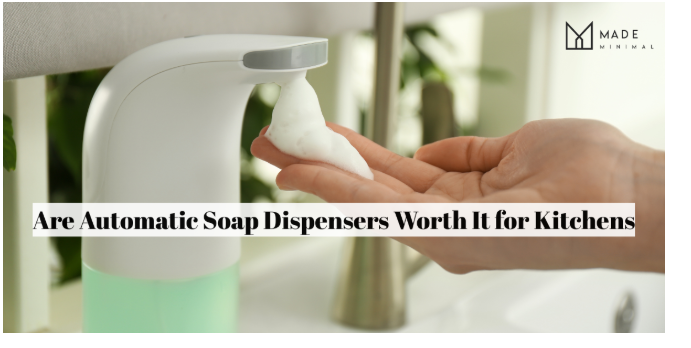
An automatic soap dispenser uses an infrared sensor to detect your hand and release soap without you touching anything.
Here’s what it looks like in action: you hold your hand under the nozzle, the sensor picks up the motion, and a set amount of soap drops into your palm. So you skip the pumping, the mess, and the contact altogether.
The way these dispensers function is pretty simple, too. Most models run on batteries or USB charging, which means you can place them anywhere near your sink. You can also fill them with liquid or foaming soap, depending on the type.
And because the dispenser controls the amount every time, you end up using less soap per wash (and yes, that saves you money over a few months).
Why a Kitchen Soap Dispenser Should Be Hands-Free
Let’s face it, kitchens are one of the messiest environments in your home, and every time you grab a manual pump with dirty hands, you spread bacteria right back onto the dispenser.
This is why Healthdirect Australia recommends washing your hands before and after handling raw meat to prevent infections. On top of that, CDC research shows proper handwashing can reduce common stomach bugs by up to 40%. And a touchless soap dispenser removes that contact point entirely.
Here’s why going hands-free is worth considering:
- Less Cross-Contamination: When you don’t touch the dispenser with raw meat or grease on your hands, you stop bacteria from building up on the soap pump surface.
- Cleaner Dispenser Overall: Because no one grabs it with dirty fingers, the unit stays cleaner for longer and needs less wiping down each week. (We hear this from customers all the time, and it’s the first thing people notice after making the switch.)
- Better Hygiene for the Whole Family: Kids and messy cooks are more likely to wash their hands when all they have to do is hold them under a sensor, which builds better hygiene habits without extra effort.
All of this adds up to a kitchen that’s easier to keep clean, with less scrubbing and fewer germs sitting on your soap dispenser between washes.
Electric Soap Dispenser vs Manual: How to Choose
Frankly, if you only wash your hands a few times a day in the kitchen, a manual soap dispenser will do the job fine. But if you’re cooking often or have a busy household, an electric soap dispenser offers a few advantages that a manual pump can’t keep up with.
Before you order, let’s do a quick comparison to help you choose:
| Feature | Electric Soap Dispenser | Manual Pump |
| Hygiene | Touchless, no contact needed | You touch the pump every time |
| Soap Portions | Dispenses a set amount automatically | Depends on how hard you press |
| Soap Types | Works with foaming and liquid options | Works with most soap types |
| Power | Battery-operated or USB rechargeable | No power needed |
| Price Range | Higher upfront, less soap waste over time | Cheaper to buy, more soap used per wash |
| Durability | Sleek build, durable, with fewer moving parts | The pump can wear out or get sticky |
Believe it or not, the main difference most people notice isn’t the sensor or the design. It’s how much less soap they go through each week. Because the dispenser releases a controlled amount every time, you stop over-pumping without even thinking about it.
And if you pick the wrong soap type for your dispenser, it can clog the pump mechanism (that’s a problem you don’t want to deal with mid-wash).
Once that’s sorted, the next decision comes down to where you actually place your dispenser, because that affects how well it fits into your kitchen routine.
Wall-Mounted Soap Dispensers vs Countertop Models
Got limited bench space in your kitchen? If so, where you place your soap dispenser can change how your whole sink area feels.
Both wall-mounted soap dispensers and countertop models have their strengths, so the right pick really depends on your kitchen layout and how much room you have to work with.
Wall-Mounted Options
Wall-mounted soap dispensers free up bench space, which is ideal for smaller Brisbane kitchens or tight sink areas. That’s actually why most of the kitchens we’ve helped set up tend to favour this style, because it keeps the area around the tap clean and uncluttered.
The only catch is that you do need to drill into the wall or use adhesive strips, so keep that in mind if you’re renting. But once it’s in place, it creates a sleek, permanent look that blends into your kitchen without taking up any counter space.
Countertop Options
If you’d rather not drill anything, a countertop soap dispenser is the easier option to set up. All you do is place it next to the sink, and you’re ready to go. These models are also simple to move around, so if you like to rearrange your space or need the dispenser in different environments like the bathroom or laundry, a countertop style gives you that flexibility.
On the flip side, they do take up bench space, which can feel crowded in smaller kitchens.
Now that you’ve picked the right dispenser, here’s how to keep it working properly for the long run.
Keeping Your Foaming Soap Dispenser Clean and Running
The sensor is the most important part to look after, so give it a quick wipe with a damp cloth every week or so. If soap residue builds up over the sensor area, it can block the infrared detection and stop the dispenser from reading your hand.
Now, believe it or not, the most common reason foaming soap dispensers clog has nothing to do with the pump itself. It comes down to using the wrong soap dilution. Foaming products need a thinner mix to function properly, so if you pour in regular liquid soap without diluting it, the nozzle gets blocked pretty quickly (most rechargeable models last around 3 months per charge, so you won’t need to worry about power too often either).
One more thing worth checking is the battery or charging level. Try to top it up before it dies completely, because a low charge can make the dispenser release uneven amounts of soap or stop responding to your hand altogether.
Are Hygiene Products Like Automatic Dispensers Really Worth It?
For most households, yes. The convenience, the cleaner sink area, and the reduced soap waste all add up to a product that earns its spot in your kitchen. If you’re someone who cooks regularly or has kids running through the kitchen, a touchless soap dispenser makes daily cleanup noticeably easier.
Ready to find yours? You can browse the entire range of soap dispensers and other hygiene products on the Made Minimal website. And if you need help finding the right fit for your space, our customer care team is always happy to help.