











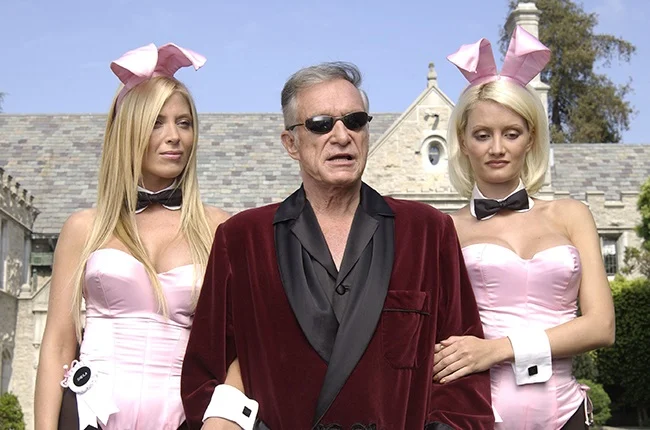
Few names in 20th-century pop culture evoke as much fascination and debate as Hugh Hefner. A man who turned a daring magazine into a global symbol of sophistication, rebellion, and sexual freedom, Hefner lived a life larger than any headline could capture. From his modest Chicago roots to the infamous Playboy Mansion, he built not just a brand but an ideology — one that reshaped media, culture, and how society talked about desire and freedom.
But who really was Hugh Hefner beyond the silk robes, parties, and controversy? Let’s peel back the curtain on his story — a blend of ambition, intellect, and contradiction.
Quick Bio: Hugh Hefner
| Full Name | Hugh Marston Hefner |
|---|---|
| Date of Birth | April 9, 1926 |
| Age (at Death) | 91 years |
| Profession | Publisher, Entrepreneur, Editor, Activist |
| Nationality | American |
| Net Worth (approx.) | $50 million (at time of death) |
| Notable Works / Achievements | Founder of Playboy Magazine, Cultural Icon, Philanthropist, Civil Rights Supporter |
Early Life and Education
Hugh Hefner was born in Chicago, Illinois, in 1926, into a conservative Methodist family. His upbringing was strict, yet his imagination soared early. As a child, he loved writing, drawing cartoons, and crafting small magazines — signs of a creative mind waiting to explode.
After serving in the U.S. Army during World War II, Hefner attended the University of Illinois at Urbana-Champaign, majoring in psychology and minoring in creative writing and art. This combination of intellect and creativity would later define his career.

During his college years, he published a student magazine called Shaft, his first real experiment in blending lifestyle content with wit and sexuality — a concept he would perfect later with Playboy.
The Birth of Playboy Magazine
In 1953, Hugh Hefner mortgaged his furniture, raised $8,000, and created something revolutionary — Playboy Magazine. The debut issue featured Marilyn Monroe on the cover and sold over 50,000 copies.
Playboy was unlike anything America had seen before. It wasn’t just about nude photography; it was a lifestyle publication. The magazine mixed sex appeal with high-quality journalism, fiction, and interviews. It featured literary giants like Ray Bradbury, Kurt Vonnegut, and Ian Fleming, giving it a layer of sophistication that separated it from adult magazines of the time.
Playboy promoted what Hefner called the “Playboy Philosophy” — the idea that pleasure, freedom, and sophistication could coexist with intelligence and taste.
The Playboy Philosophy
At the heart of Hugh Hefner’s empire was more than just entertainment. It was an ideology that challenged post-war American conservatism. Through the Playboy brand, Hefner championed:
-
Sexual liberation — normalizing conversations about intimacy and pleasure.
-
Civil rights — supporting Black artists and writers in a time of segregation.
-
Freedom of expression — standing against censorship in media.
-
Individualism — celebrating self-expression and personal freedom.
However, his philosophy was not without critics. Feminists of the 1960s and ’70s accused him of objectifying women, arguing that Playboy perpetuated unrealistic standards. Hefner countered that the magazine promoted sexual freedom and equality, but the debate remains one of the most controversial aspects of his legacy.
Building the Playboy Empire
The success of Playboy Magazine led to a sprawling business empire. Hefner launched Playboy Clubs, television shows, and a host of branded merchandise. By the 1970s, Playboy had become synonymous with luxury and freedom.
The Playboy Mansion in Los Angeles became the ultimate symbol of this lifestyle — lavish parties, celebrity guests, and an air of exclusivity surrounded it. From Frank Sinatra to Muhammad Ali, everyone wanted an invite.
Yet, Hefner didn’t see himself as merely a businessman. He saw himself as a social revolutionary. He once said, “I was a kid from a conservative family who grew up in the Depression. The magazine was my response — a celebration of life and pleasure.”
Controversies and Criticism
Hugh Hefner’s life was full of glamour, but it was also shrouded in controversy.
Some major criticisms include:
-
Objectification of Women: Feminist activists accused Hefner of reducing women to sexual objects for male pleasure.
-
Toxic Culture Claims: Former Playboy models and staff have described the mansion environment as exploitative and manipulative.
-
Public Backlash: Later documentaries and memoirs reignited debates about whether Hefner’s brand empowered or exploited women.
Despite this, many defended him as a visionary who helped open society’s discussion around sexuality and gender roles.
Hugh Hefner as a Cultural Icon
Whether loved or loathed, Hugh Hefner was undeniably influential. He was one of the first publishers to blend adult content with political and social commentary. Playboy interviews became legendary — featuring figures like Martin Luther King Jr., John Lennon, and Malcolm X.
He wasn’t afraid to challenge authority either. In the 1960s, Hefner was arrested for obscenity charges after publishing explicit photos — but he fought for freedom of the press and won.
Moreover, he contributed to the sexual revolution, helping society move away from shame and secrecy. His influence spread beyond print — into television, fashion, and even modern pop culture.
Relationships and Personal Life
Hefner was often portrayed as the ultimate bachelor, but his personal life was layered with complexity. He married three times:
-
Mildred Williams (1949–1959) – with whom he had two children.
-
Kimberley Conrad (1989–2010) – the marriage that brought two more sons.
-
Crystal Harris (2012–2017) – a former Playboy model who was 60 years his junior.
His relationships were always in the public eye, often sparking debate about age gaps and power dynamics. Yet, those close to him described him as gentle, intellectual, and deeply loyal to his family.
Hugh Hefner’s Legacy
When Hugh Hefner passed away in 2017, he left behind more than just a magazine — he left a cultural legacy. His life sparked debates about morality, media, and freedom that continue today.
Some remember him as a pioneer of personal freedom, while others see him as a symbol of exploitation. But there’s no denying that he changed how the world viewed sexuality, lifestyle, and self-expression.
Key aspects of his legacy include:
-
Playboy’s cultural impact on media and fashion.
-
Advocacy for civil rights and free speech.
-
Philanthropic efforts supporting education and journalism.
-
Inspiration for modern lifestyle media that blend entertainment with intellect.
Interesting Facts About Hugh Hefner
-
He wrote for Esquire before launching Playboy.
-
He had an IQ of 152 — placing him among the gifted range.
-
The Playboy Bunny logo is one of the most recognized symbols in the world.
-
He was buried next to Marilyn Monroe, the first woman to grace his magazine cover.
-
Hefner often worked in pajamas, saying comfort improved creativity.
The End of an Era
Hugh Hefner’s death in 2017 marked the end of an era — one where rebellion, art, and sensuality intertwined in glossy pages that captivated millions. Playboy, under his guidance, became more than a magazine; it was a mirror reflecting society’s evolving values.
Today, as digital media continues to transform storytelling and entertainment, Hefner’s vision remains a reference point — proof that one idea, however controversial, can change culture forever.
Conclusion
So, who was Hugh Hefner? He was more than the man in the silk robe. He was a dreamer who believed in freedom, a marketer who understood human desire, and a publisher who turned taboo into conversation.
Whether you see him as a hero or a hedonist, Hugh Hefner undeniably shaped modern culture. His story reminds us that influence isn’t about perfection — it’s about daring to challenge the world as it is.
If this story inspired you or made you reflect, share it with others. After all, conversations — the kind Hefner loved — are what keep legacies alive.