











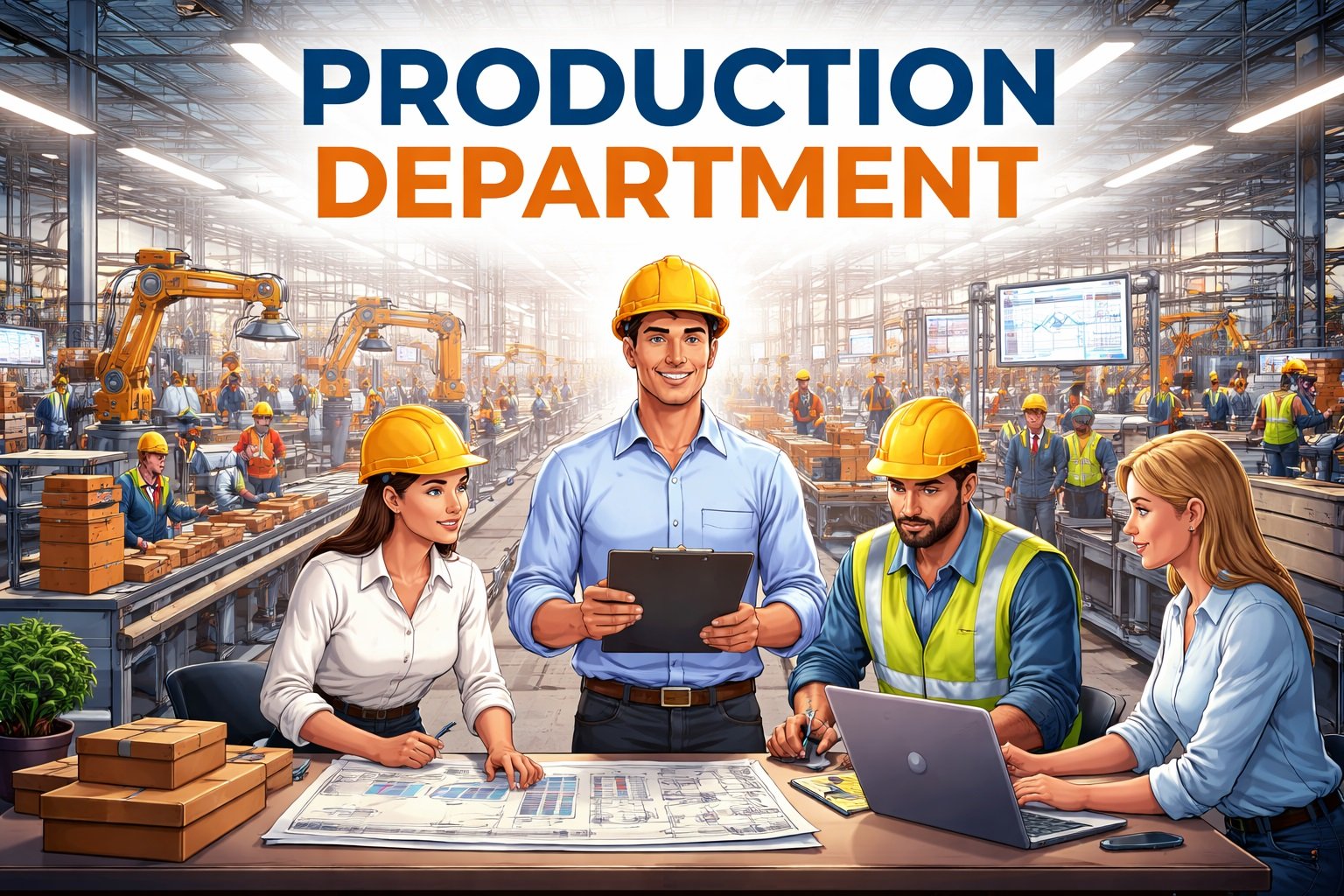
Why the Production Department Matters More Than You Think
Behind every product you use daily, there is a system quietly working to turn ideas into reality. From raw materials to finished goods, the Production Department is where planning meets execution. Yet, many people misunderstand its true importance, often reducing it to “just manufacturing.” In reality, it is the backbone of operational success.
Whether you are a student trying to understand business functions, a manager aiming to improve efficiency, or an entrepreneur scaling production, knowing how the Production Department operates can change how you view an entire organization. This department directly affects cost, quality, customer satisfaction, and long-term profitability.
Let’s break it down clearly and practically, without jargon or unnecessary complexity.
What Is the Production Department?
The Production Department is responsible for transforming inputs such as raw materials, labor, and machinery into finished products ready for the market. It focuses on planning, organizing, directing, and controlling all production-related activities.
However, its role goes beyond manufacturing. It coordinates with procurement, quality control, maintenance, inventory, and logistics teams to ensure seamless operations. A well-managed Production Department keeps costs under control while meeting demand efficiently.
In simple terms, if a business promises a product, the Production Department makes sure that promise is fulfilled.
Core Objectives of the Production Department
Every Production Department works toward specific objectives that support business success.
Ensuring Continuous Production
One of the primary goals is to maintain uninterrupted production flow. Delays, breakdowns, or material shortages can lead to missed deadlines and unhappy customers.
Maintaining Quality Standards
Quality is not optional. The Production Department ensures that products meet defined quality benchmarks through inspections, testing, and process control.
Cost Efficiency and Waste Reduction
By optimizing resource usage, reducing scrap, and improving workflows, the department helps minimize production costs while maximizing output.
Meeting Market Demand
Balancing production capacity with customer demand is a constant challenge. The Production Department plays a key role in forecasting and production scheduling.
Key Roles Within the Production Department
A Production Department is not run by a single individual. It includes multiple roles, each with specific responsibilities.
Production Manager
The production manager oversees the entire production process. They are responsible for planning schedules, allocating resources, and coordinating with other departments.
Their decisions directly affect productivity, delivery timelines, and operational costs.
Production Supervisor
Supervisors manage day-to-day activities on the production floor. They ensure workers follow processes, safety standards, and production targets.
They also act as a bridge between management and workers.
Machine Operators and Technicians
These professionals handle machinery and equipment. Their skills directly influence production speed and quality.
Proper training and maintenance knowledge are critical at this level.
Quality Control Inspectors
Quality inspectors monitor production output to ensure products meet specifications. They identify defects early, reducing waste and rework.
Main Responsibilities of the Production Department
Production Planning and Scheduling
Planning is the foundation of efficient production. The Production Department decides what to produce, how much to produce, and when to produce it.
This involves:
- Demand forecasting
- Resource planning
- Capacity utilization
- Timeline management
Without proper planning, even the best equipment and workforce can fail.
Raw Material Management
Production depends heavily on raw materials. The department coordinates with procurement to ensure materials are available when needed.
Poor material planning can cause production delays and increased costs.
Process Optimization
Improving production processes is a continuous responsibility. This includes:
- Reducing production cycle time
- Eliminating bottlenecks
- Improving workflow efficiency
Small improvements here can lead to significant cost savings over time.
Quality Assurance
Quality control is embedded throughout production. The Production Department ensures compliance with standards through inspections, testing, and corrective actions.
Consistent quality builds customer trust and brand reputation.
Equipment Maintenance Coordination
Production cannot stop due to equipment failure. The department works closely with maintenance teams to schedule preventive maintenance and minimize downtime.
How the Production Department Supports Other Departments
Coordination With Procurement
Raw material availability directly impacts production schedules. Clear communication between production and procurement avoids shortages and overstocking.
Collaboration With Sales and Marketing
Sales forecasts help the Production Department plan output levels. Without this coordination, businesses risk underproduction or excess inventory.
Integration With Quality Control
Quality teams rely on production data to identify defects and process issues. Together, they maintain consistent standards.
Alignment With Logistics and Inventory
Finished goods must move efficiently to warehouses or customers. Production planning affects inventory levels and delivery timelines.
Production Department in Manufacturing vs Service Industries
The Production Department exists in both manufacturing and service sectors, though responsibilities differ slightly.
Manufacturing Industry
In manufacturing, production focuses on physical goods. Machinery, assembly lines, and raw materials are central to operations.
Examples include:
- Automotive manufacturing
- Textile production
- Electronics assembly
Service Industry
In services, production refers to delivering services rather than goods. The Production Department manages workflows, staff allocation, and service quality.
Examples include:
- Hospitality
- Healthcare
- Software development
Regardless of industry, the Production Department ensures consistency and efficiency.
Importance of Technology in the Production Department
Modern Production Departments rely heavily on technology to stay competitive.
Automation and Machinery
Automation improves speed, accuracy, and consistency. It also reduces human error and labor costs.
Production Management Software
Digital tools help track production schedules, inventory levels, and performance metrics in real time.
Data-Driven Decision Making
Production data helps managers identify inefficiencies, predict demand, and improve planning accuracy.
Technology transforms production from reactive to proactive.
Common Challenges Faced by the Production Department
Even the most efficient Production Department faces challenges.
Demand Fluctuations
Sudden changes in demand can disrupt production planning and inventory management.
Equipment Breakdowns
Unexpected machine failures lead to delays and increased costs.
Workforce Management
Skill gaps, absenteeism, and training needs affect productivity.
Quality Issues
Maintaining consistent quality across large production volumes is a constant challenge.
Recognizing these challenges helps businesses prepare better solutions.
Best Practices for an Efficient Production Department
Clear Communication
Open communication between teams reduces misunderstandings and delays.
Continuous Improvement Culture
Encouraging employees to suggest improvements leads to better processes and higher engagement.
Training and Skill Development
Well-trained workers operate efficiently and adapt to new technologies faster.
Performance Monitoring
Tracking key performance indicators helps identify areas for improvement.
Sample Structure of a Production Department
| Role | Key Responsibility |
|---|---|
| Production Manager | Overall planning and control |
| Supervisor | Daily operations and workforce supervision |
| Machine Operator | Equipment handling and output |
| Quality Inspector | Product quality assurance |
| Maintenance Staff | Equipment upkeep and repairs |
This structure may vary based on company size and industry.
Why the Production Department Is Critical for Business Growth
A strong Production Department directly influences business scalability. Efficient production allows companies to meet growing demand without sacrificing quality or increasing costs excessively.
Moreover, production efficiency improves profit margins and customer satisfaction simultaneously. Businesses that invest in production excellence often outperform competitors.
Future Trends in Production Department Management
The future of the Production Department is shaped by innovation.
Key trends include:
- Smart manufacturing
- Artificial intelligence in production planning
- Sustainable production practices
- Predictive maintenance
These trends focus on efficiency, sustainability, and adaptability.
Conclusion: Understanding the Production Department Builds Better Businesses
The Production Department is far more than a manufacturing unit. It is a strategic function that connects planning, execution, quality, and delivery. From managing resources to maintaining standards, its roles and responsibilities shape the success of an organization.
When production runs smoothly, everything else falls into place. Costs stay under control, customers remain satisfied, and businesses grow sustainably.
If you found this explanation helpful, share it with others who want a clearer understanding of how production works, or leave a comment with your thoughts and experiences. Conversations like these help everyone learn and improve.