










Why Understanding the Scope of Accounting Matters
Accounting is often called the language of business, and for good reason. Every organization, whether a small startup or a multinational corporation, relies on accurate financial records to make informed decisions. Understanding the scope of accounting can open a wide range of professional opportunities, whether you aspire to become a chartered accountant, financial analyst, auditor, or CFO.
For students, professionals, and business enthusiasts, knowing the opportunities within accounting isn’t just about numbers—it’s about strategic growth, career stability, and long-term success. In this guide, we will explore the scope of accounting, emerging trends, career paths, and tools that can help professionals thrive in this dynamic field.
What Is the Scope of Accounting?
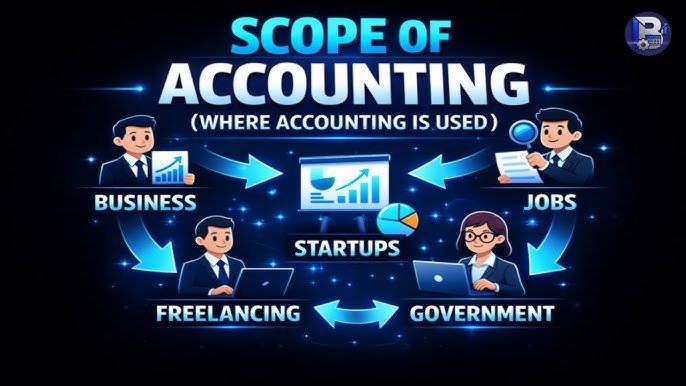
The scope of accounting refers to the range of activities, responsibilities, and career opportunities that accounting professionals can pursue. It covers more than just bookkeeping—it encompasses analysis, reporting, compliance, auditing, taxation, and financial strategy.
Accounting plays a pivotal role in:
- Financial Decision-Making – Providing accurate data to guide business strategy.
- Legal Compliance – Ensuring organizations adhere to tax laws and regulations.
- Operational Efficiency – Tracking expenses, revenues, and cost management.
- Investment Planning – Assisting individuals and businesses in making informed investment choices.
Key Areas Within the Scope of Accounting
Accounting is a diverse field with several specialized areas. Here’s a detailed breakdown:
1. Financial Accounting
- Focuses on preparing financial statements for stakeholders.
- Ensures accuracy in income, balance sheets, and cash flow reports.
- Helps investors and management make informed decisions.
2. Management Accounting
- Deals with internal decision-making and strategy.
- Provides insights into budgeting, forecasting, and performance evaluation.
- Supports operational and strategic planning.
3. Cost Accounting
- Tracks and analyzes production costs.
- Helps businesses optimize resource allocation.
- Essential for manufacturing and service industries.
4. Auditing
- Verifies financial statements for accuracy and compliance.
- Can be internal (within a company) or external (independent audit firms).
- Builds trust and transparency for stakeholders.
5. Taxation
- Focuses on preparing tax returns and ensuring compliance.
- Advises on tax planning and saving strategies.
- Involves both corporate and personal taxation.
6. Forensic Accounting
- Investigates financial fraud and discrepancies.
- Combines accounting expertise with investigative skills.
- Increasingly in demand in corporate compliance and legal cases.
Career Opportunities Within the Scope of Accounting
The scope of accounting is vast and offers multiple career paths depending on education, skillset, and professional certifications.
Entry-Level Opportunities
- Junior Accountant – Handles bookkeeping, invoicing, and payroll.
- Accounts Assistant – Supports senior accountants in daily financial tasks.
- Tax Assistant – Prepares and files tax returns under supervision.
Mid-Level Opportunities
- Financial Analyst – Evaluates company performance and investment opportunities.
- Cost Accountant – Manages cost efficiency and production budgets.
- Internal Auditor – Reviews internal controls and financial processes.
Senior-Level Opportunities
- Chartered Accountant (CA) – Expert in finance, taxation, and auditing.
- Finance Manager – Oversees financial planning and reporting.
- Chief Financial Officer (CFO) – Leads financial strategy and decision-making.
Specialized Roles
- Forensic Accountant – Investigates fraud and financial irregularities.
- Corporate Tax Consultant – Provides tax-saving strategies for businesses.
- Management Consultant – Offers strategic advice based on financial insights.
Skills Needed to Excel in Accounting
Success in accounting goes beyond memorizing rules and figures. Professionals need a combination of technical and soft skills:
Technical Skills
- Proficiency in accounting software (Tally, QuickBooks, SAP)
- Strong analytical and problem-solving abilities
- Knowledge of taxation laws and compliance regulations
- Financial reporting and auditing expertise
Soft Skills
- Attention to detail and accuracy
- Effective communication for reports and presentations
- Time management and multitasking
- Ethical judgment and professional integrity
Certifications That Boost Scope
- CA (Chartered Accountant)
- CPA (Certified Public Accountant)
- CMA (Certified Management Accountant)
- ACCA (Association of Chartered Certified Accountants)
These certifications can significantly expand the scope of accounting by opening doors to international opportunities.
Emerging Trends Expanding the Scope of Accounting
The accounting profession is evolving rapidly with technology and globalization:
1. Automation and AI
- Routine bookkeeping and reconciliations are increasingly automated.
- AI tools analyze data faster and more accurately.
- Accountants can focus on strategic advisory roles.
2. Cloud Accounting
- Enables real-time access to financial data from anywhere.
- Facilitates collaboration across teams and locations.
- Popular tools: Xero, QuickBooks Online, Zoho Books.
3. Sustainability and ESG Reporting
- Companies are required to report on environmental, social, and governance (ESG) metrics.
- Accountants now provide insights on sustainability and social impact.
4. Globalization and Compliance
- Multinational businesses require accountants to manage cross-border taxation and regulations.
- Expertise in international accounting standards (IFRS, GAAP) is increasingly valuable.
Advantages of Pursuing a Career in Accounting
- High Demand: Organizations across sectors require skilled accountants.
- Job Stability: Accounting remains recession-resilient due to essential financial functions.
- Growth Opportunities: From entry-level roles to CFO, there’s a clear career path.
- Global Opportunities: Certifications allow international mobility.
- Diverse Roles: Finance, audit, taxation, consulting, forensic accounting, and more.
Common Misconceptions About Accounting
Despite its appeal, accounting is sometimes misunderstood:
- Accounting is not just about numbers; it involves analysis, strategy, and advisory roles.
- The field isn’t stagnant—technology and globalization have made it dynamic.
- It’s not limited to corporate jobs; freelance accounting and consultancy are growing rapidly.
By understanding the scope of accounting, students and professionals can make informed career choices.
Table: Popular Accounting Roles and Salaries
| Role | Experience | Average Salary (Approx.) | Key Responsibilities |
|---|---|---|---|
| Junior Accountant | 0-2 years | $30,000 – $45,000 | Bookkeeping, invoices, payroll |
| Financial Analyst | 2-5 years | $50,000 – $70,000 | Analyze company finances, forecasts |
| Chartered Accountant | 3-7 years | $60,000 – $90,000 | Auditing, taxation, financial advisory |
| Finance Manager | 5-10 years | $80,000 – $120,000 | Oversee financial planning & reporting |
| Chief Financial Officer | 10+ years | $150,000+ | Lead financial strategy & decision-making |
Conclusion: Maximizing the Scope of Accounting
The scope of accounting is broad, evolving, and filled with opportunities for motivated professionals. From traditional bookkeeping to strategic financial management and forensic accounting, the field offers diverse roles and growth potential.
By acquiring the right skills, pursuing certifications, and staying updated with emerging trends, accountants can enjoy rewarding careers with stability, global prospects, and long-term professional growth.
Whether you’re a student planning your future or a professional looking to advance, understanding the scope of accounting is the first step to unlocking career success.